Imagine you delegate a weekly report and hand over the instructions. While preparing it, the other person finds two different dates for the same delivery and stops. You still need to clarify which information to use and whom to ask.
To check whether you delegated well, look at both the work delivered and the instructions and support you provided. Here is an exercise to try with your team. The example is hypothetical.
1. Agree on what needs to be finished
Choose a regular, specific, low-risk task. In this example, the person will draft an internal delivery report using fictional data. Whoever normally does the task will review the practice draft before the person prepares a report with real data.
Make clear what needs to be done, by when and who will receive it. “Support operations” is too broad. “Draft the weekly report using information available by Friday at noon” gives you a specific result to agree on. Set a delivery time and agree on who will review it, too.
Avoid starting with payments, safety decisions, access changes, client commitments or tasks that require a professional license. Choose something that fits the person’s training and permissions.
2. Clarify what they can decide and when to ask you
Before starting, write down which decisions the person can make and when they need help. For the report in this example:
- What to deliver: a draft covering every delivery in the period, who is responsible for each one, its expected date and its status.
- What information to use: only the agreed practice list, noting the date and time through which it includes data.
- What they can decide: sort rows and fix formatting without changing the meaning of the data.
- When to ask: if the name of the person responsible is missing, dates conflict or a status is unconfirmed. Mark it “pending confirmation” until it is clarified.
- What is not authorized: changing original records, promising dates or sending the draft to clients.
- What you will check: that every delivery is included, the data matches the list and any questions are flagged.
If the person has to guess what you would do, check what you still need to explain. Write down what you agree so they can refer to it.
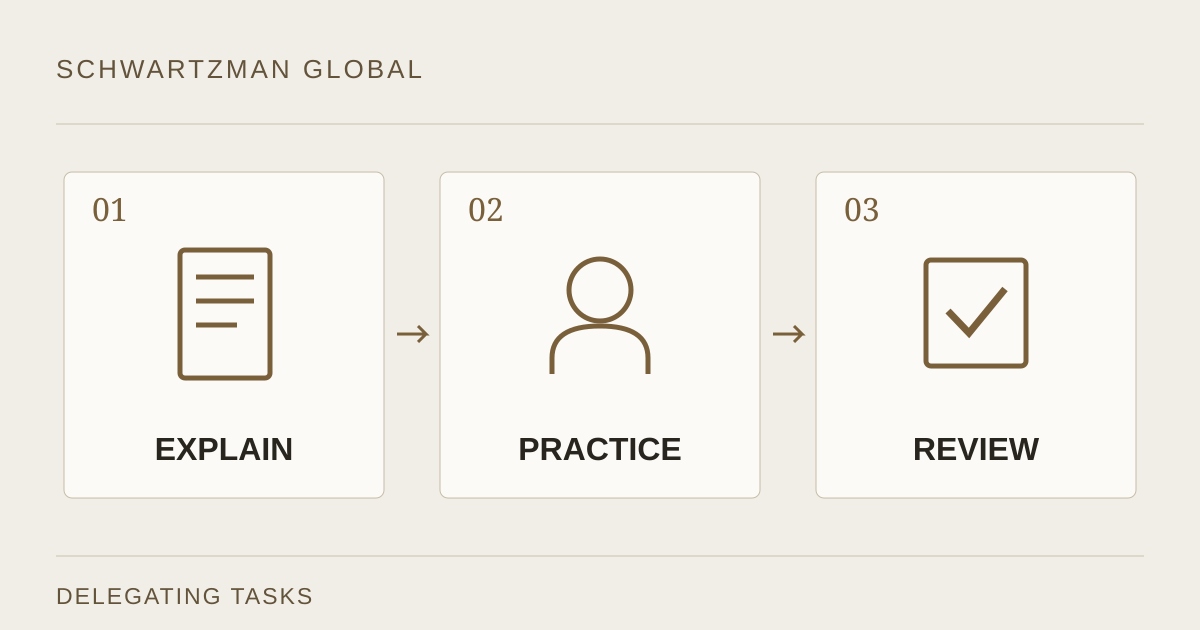
3. Show an example and let them try
Ask someone who knows the task to demonstrate it. Have them explain what they check first, when they stop to ask a question and how they tell a confirmed fact from an assumption. Then ask the person taking on the task to explain, in their own words, what they will do.
NASA’s guide for people moving into a role recommends asking the previous person to explain how they think during daily work. It is a useful reference for explaining why you make certain decisions. It does not show that this exercise works in every business. Read NASA’s guide (PDF).
Make sure someone is available to answer questions during practice. Agree on whom to contact if that person is unavailable. Give the person time to think and ask what they would do before offering an answer. Step in if a risk appears or they try to make a decision they are not authorized to make.
4. Review the work and where they needed help
Compare the draft with what you agreed. Did it include every delivery? Use the right information? Flag missing data? Did the person ask before making a decision they were not authorized to make?
Note the date, task, instructions used, questions that came up and corrections needed. Agree on who will update the instructions. Use only authorized information and store it in a place approved by the company.
Find out what caused each difficulty. If a step was missing, add it to the guide. If a screen was confusing, review how to use it or whether it needs changing. If a decision was unclear, show another example and let the person try again.
Asking questions at the right time can prevent mistakes. To see how the delegation went, also check the quality of the work and whether the person followed what you agreed.
5. Check that they can repeat it before giving them more tasks
One attempt is not enough to know how someone will handle other situations. Try another example of the same task and see whether they can finish it without you completing the work for them.
Give them more responsibility when they can deliver what you agreed and know when to ask for help. How much practice they need will depend on the task and the risk of getting it wrong. No single number of attempts or timetable works for everyone.
If you want the business to depend less on you, this helps you see which tasks someone else can do and where they still need your support. It can also help when preparing someone to take over your role or organizing the business for a possible sale. One task done well does not show that the whole business is ready for a change of ownership.
What can you do this week?
Choose a low-risk task. Agree on the result and deadline, which decisions the person can make and when they should ask you. Let them do it with help available, then review the result together.
What do you need to clarify so that this person can finish the task without you doing it for them?
Educational content about operational preparation and continuity. The example is hypothetical and does not promise results. Succession or a sale requires further analysis and appropriate specialists. This is not financial, investment, tax or legal advice, or an offer of brokerage services.