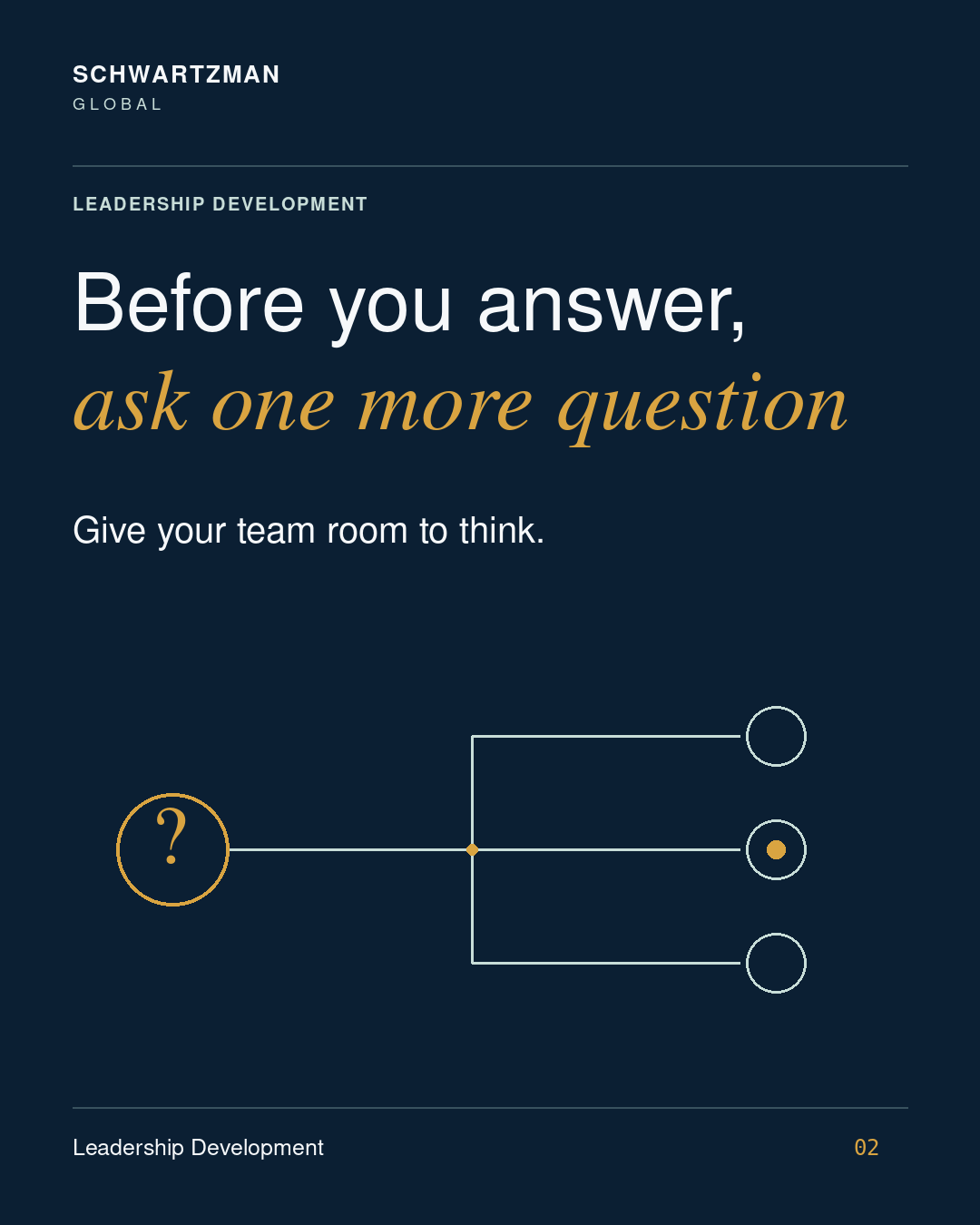
A one-to-one can also make room for developing judgment. Choose a specific situation, listen to the person's reasoning and close with an agreement you can review.
You do not need to solve every issue in one meeting. Start with a conversation that makes the next step clearer.
Choose a real situation
Ask which issue feels difficult or which decision needs preparation. Find a case specific enough to understand: competing priorities, a conversation that has been postponed or a delivery that is not moving forward.
Confirm what the person needs from you. They may want context, a decision, resources or help organizing their thinking. Understanding that need keeps you from working on different problems.
Protect privacy. Share only the information appropriate for the conversation and keep agreements in an authorized place.
Listen before offering your answer
When you know the work well, a solution may come to mind quickly. Before giving it, ask which options the person sees and what they would recommend.
Listen to what they are considering. Do they understand the priority and constraints? Have they considered the people who need the result? Their answers can reveal where support would help.
Avoid turning the conversation into a test of whether they can guess your preference. Share information only you have. If a decision has already been made, be clear about it.
Add the missing context
Judgment requires usable information. Explain why the result matters, which limits apply and what the person may decide within their responsibility.
Questions can help, but some situations call for immediate direction, especially when urgency or risk is involved. Match your involvement to the person's preparation and the consequences of the work.
The aim is to help them move forward with understanding and support. Sometimes that means showing an example, thinking together or allowing a low-risk approach to be tested.
Close with a short agreement
Before finishing, confirm who will do what, by when and with what support. Ask the person to explain the agreement in their own words. Be equally clear about your contribution.
Define what requires consultation and when you will review progress. Asking for help then becomes part of the agreement rather than a sign of failure.
A useful commitment creates something observable. “Improve communication” may express an intention. Preparing a conversation, having it and reviewing what was learned gives both of you a clearer next step.
Return to the learning
At the next meeting, review what happened. Ask what worked, where a difficulty appeared and what the person would do differently.
Recognize progress with specific examples. When something did not go as expected, examine the context and reasoning before deciding what needs to change.
Practice becomes more useful when it produces an adjustment for the next attempt. Follow-up should support learning and responsibility without turning every conversation into an endless report.
Start with your next one-to-one
Choose one question for the next conversation: “What options do you see?”, “What would you recommend?” or “What do you need from me to move forward?”.
Then listen, provide context and agree on a next step. Notice whether the person leaves with more clarity and whether the agreement can hold between meetings.
What would you change in your next one-to-one to give your team's judgment more room?
This article is for educational purposes about leadership and team development. It does not constitute financial, investment, tax or legal advice, or an offer of brokerage services.