Are your processes documented, or does someone still carry the details in their head? If you already have a manual, a useful next step is to open it with the person who knows the task and the person who will learn it.
During that conversation, notice what the experienced person needs to explain for the instructions to make sense. Decision criteria, exceptions or practical details may still be missing from the page.
This approach focuses on reviewing a low-risk internal task. The goal is to improve the explanation and prepare for practice. The learner's ability to perform the task is checked afterward, with the appropriate support and authorization.
1. Choose one task and its expected output
Keep the review focused. Rather than walking through the entire operations manual, choose a recurring task, such as preparing an internal meeting agenda.
Before you begin, agree on what needs to be ready, who needs it and where to find the current instructions. Allow time for questions as well as the explanation.
Bring together the person who knows the work and the person learning it. If needed, include the manager who can clarify an approval requirement. Use only documents and examples that everyone involved is authorized to access.
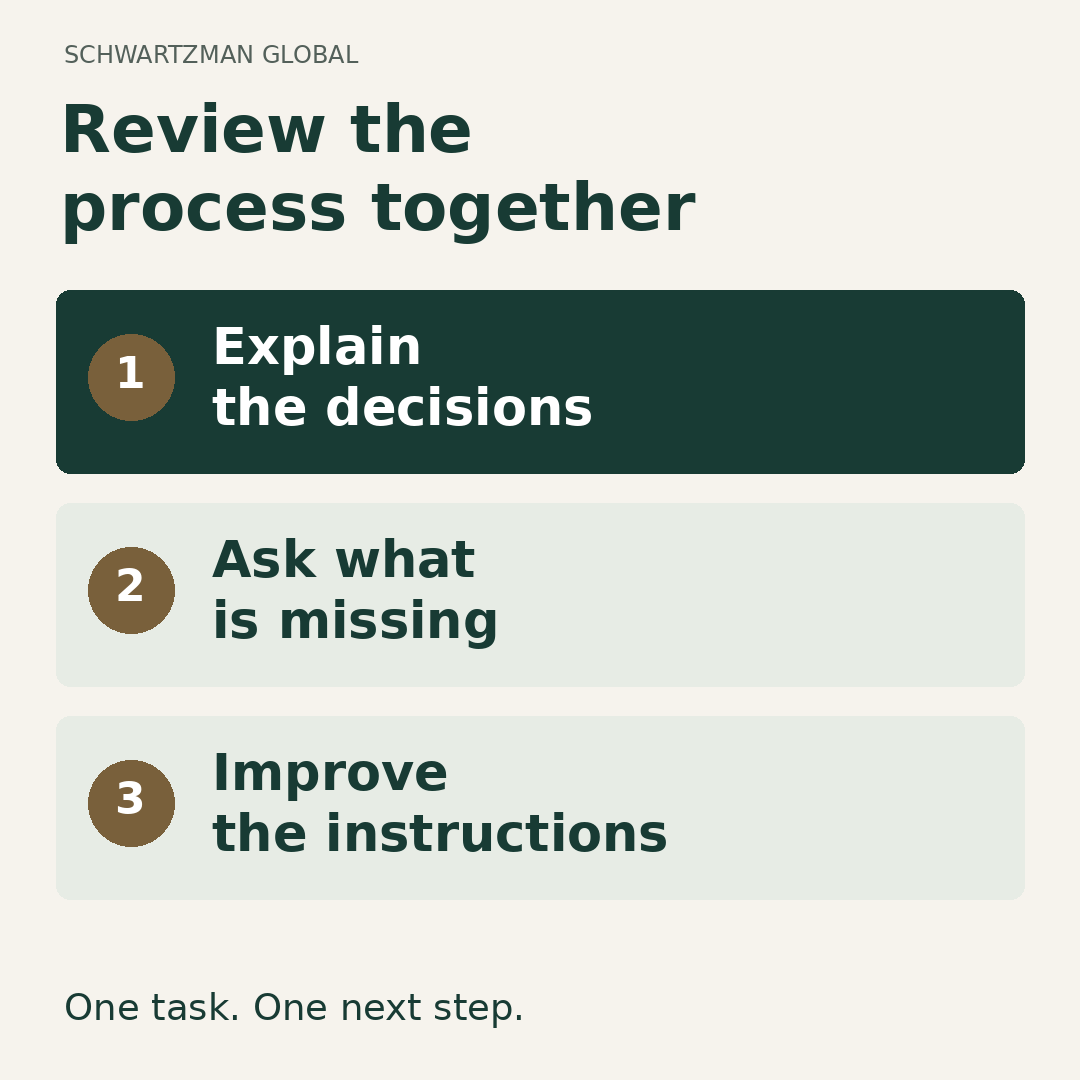
2. Ask the experienced person to explain their decisions
Walk through the instructions using a fictional or appropriately authorized example. At each decision, ask: “What do you check here?”, “How do you choose what happens next?” or “When would you need to ask someone?”
Consider this hypothetical situation: the manual says, “Prepare Monday's agenda.” The person doing the task explains that they first check which items require a decision, ask each item owner for missing information and confirm with the manager which topics fit the available time.
Those details explain what preparing the agenda involves. The learner also needs to know what they can organize on their own and what requires confirmation before the final version is sent.
3. Listen for the points where the learner gets stuck
Ask the learner to walk through the same example in their own words and identify where they would need help. They might ask where to find a template, how to spot missing information or who can approve a change.
Avoid answering every question with “It's already in the manual.” Find the instruction together and check whether someone new to the task could use it.
Also ask which parts are clear and worth keeping. If several improvements come up, ask both people to choose the one that would address a specific difficulty first and explain why. The review benefits from the judgment of both the experienced person and the learner.
4. Turn the explanation into a usable instruction
For the meeting agenda, a revised instruction might read:
Hypothetical manual entry:
“Collect the proposed topics and check that each includes the decision needed, the item owner and the necessary information. Ask the item owner for any missing details.
Prepare a proposed running order using the current template. The manager confirms priorities and approves the agenda before it is sent. If an urgent topic comes up after approval, check with the manager before changing the agenda.”
The wording should reflect the responsibilities actually authorized in your business. Record who will review the manual change and where the approved version will be kept. A suggested improvement remains a proposal until it receives the necessary approval.
Finish with a small, bounded trial
Agree on one task, the resources to use, who will provide support and a review date. In our example, the learner could draft the next agenda, with the manager reviewing it before anything is sent.
When reviewing the draft, check whether the learner could gather the topics, spot missing information and identify decisions that needed approval. Record questions that need further explanation and update the instructions through the appropriate approval process.
If you own the business, agree on what you need to see to oversee progress: the draft, open questions and the next step. This gives you a way to review the work without assuming that one conversation has made the learner ready to operate independently.
Processes involving safety, sensitive data or regulated activities require their own controls and qualified specialists. Choose a different exercise if practice could create commitments or consequences that have not been authorized.
Which task would be worth reviewing this week with the person who will learn it?
Reference: NASA’s knowledge continuity guide for incoming team members recommends asking experienced colleagues to explain their thinking and discussing knowledge that is not documented. The sequence and example in this article are our own editorial proposal for business tasks. The reference does not imply NASA endorsement or establish legal requirements for your business.
Educational content on workplace learning and preparation for operational continuity. Share only appropriate information and preserve your organization’s authorization requirements. This is not legal, tax, financial or investment advice, or an offer of brokerage services.