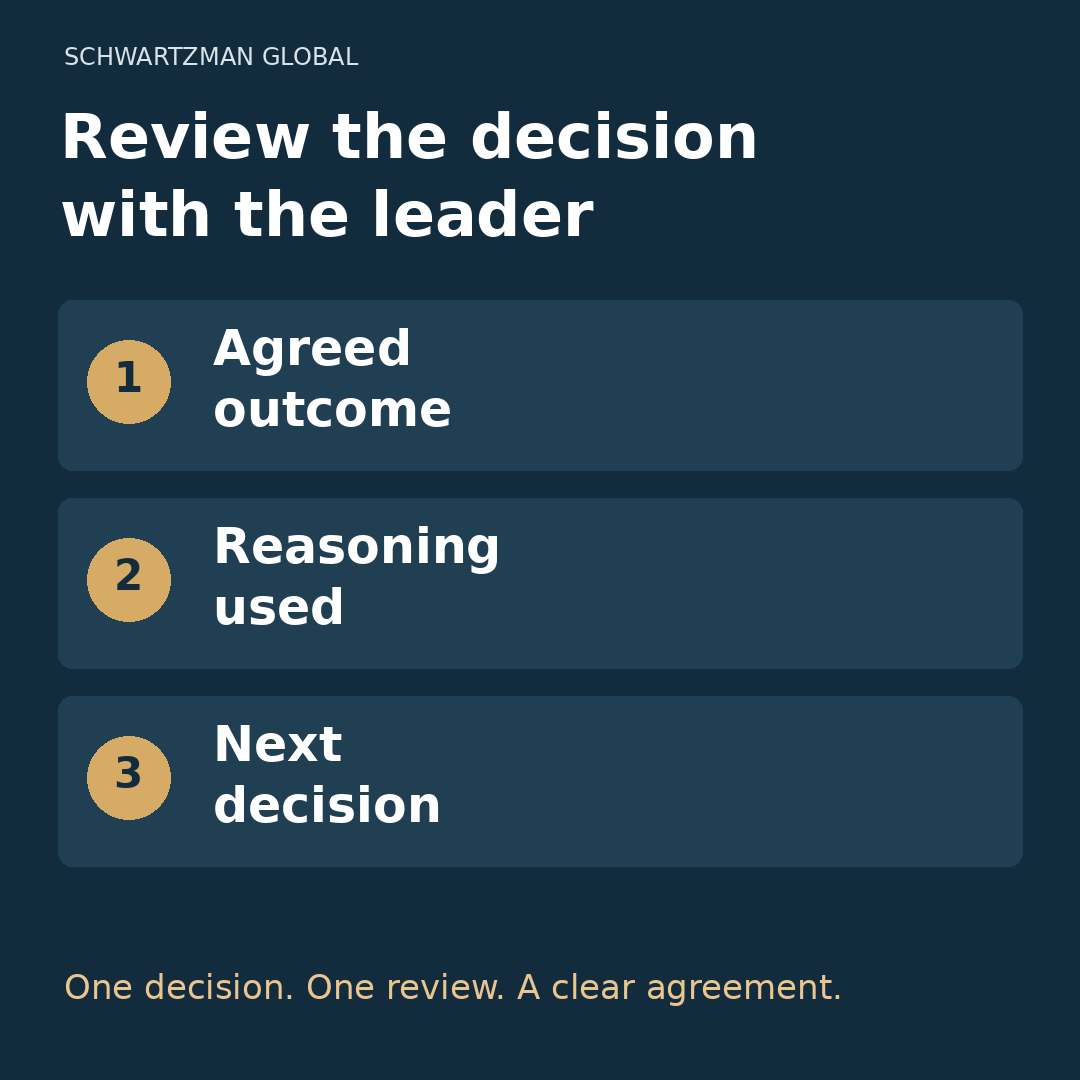
You delegated a decision, and the person chose a different option from the one you would have picked. Before asking them to change it, consider this question: did it meet the outcome and limits we agreed on?
This conversation matters when you are preparing someone from the next generation, or a leader on your team, to take on more responsibility. They need to know how you will review their work and which decisions remain theirs to make.
The approach here is a micro-experiment: a small trial with one low-risk internal decision, defined resources and a review date. Adapt it to your company’s existing authority and controls.
1. Make clear what they can already decide
Before starting, describe the outcome, deadline, authorized decisions and matters that require consultation. Also agree on what information you will see and when you will review what happened.
If each option still needs your prior approval, say so explicitly. That stage can be useful for practicing how to prepare a recommendation. When you authorize the person to choose within specific limits, make clear what they can carry out without asking again.
A fictional example of a working agreement:
“This week, you will lead Friday’s internal meeting. You can choose the order of the three approved topics and allocate the thirty minutes available. By the end, each topic should have a next step and a responsible person who has accepted it.
If you need to add a topic, change a client commitment or assign work beyond agreed responsibilities, consult the person with the relevant authority first. This exercise does not authorize new spending. We will review the meeting’s agreements together on Friday afternoon.”
Ask the new leader to explain the agreement in their own words, then do the same yourself. Resolve any differences before trying it.
2. Review the outcome before changing the method
In the example, start with specific questions: were all three topics addressed? Were next steps and responsible people identified? Did the meeting stay within thirty minutes? Did anything arise that required consultation?
Then listen to the reasoning: “Why did you choose that order?” or “What information did you use to allocate the time?” Consider what the person knew when they decided, as well as what you both know now.
If the outcome meets the agreement and the decision was within their authority, you can offer another approach as a suggestion. Make clear whether you are giving advice or an instruction that changes the agreement. Both people should understand the distinction.
3. Identify what needs correcting
Suppose one topic ended without a responsible person. Ask what happened: perhaps nobody present had the authority to accept the next step, or the topic needed more information. Ask the new leader to propose how to complete it and what they would change for the next meeting.
Also review the support you had offered. If information was unavailable or you did not answer an agreed request for input, include that in the discussion.
If a decision exceeded the limits, clarify which one, what consequences it had and who must authorize the correction. A risk or urgent issue should go through the appropriate channel immediately, without waiting for the review meeting.
When a responsibility needs to change or be suspended, the person with authority should explain the scope, reason and next review date. The new leader needs to know what they can still decide while the issue is resolved.
4. Finish with the next agreement
Write down what stays the same, what changes, who will do each part and when you will review it. In our example, you might agree to confirm that the necessary people will attend before the meeting. The new leader would still decide the order of the topics.
To assess the micro-experiment, record what was completed, where support was needed and why any decision returned to the owner. A planned consultation or timely warning can be part of good work. Look at the quality of the decisions as well as the number of questions.
If you are the person stepping into leadership, bring the outcome, your reasoning, your questions and a proposal for the next attempt. Ask directly: “What can I continue to decide, and what changes from now on?”
Preparing for succession or less day-to-day owner involvement requires checking specific responsibilities in practice. This exercise helps you observe one of them; it does not establish that the company is ready to operate without its owner.
Which delegated decision could you review together this week using these criteria?
A book for each side of the transition
If you are preparing to lead the family business, buy Tomar el Mando on Kindle, by Arie Schwartzman.
If you own the business and want to prepare to delegate and hand over leadership, buy Pasar el Mando on Kindle.
Both books are in Spanish. You can also explore the free Spanish-language resource on responsibilities and decision agreements, with a companion audio recording. The page is public; no book purchase is required.
Read the notice about the books and their resources. Amazon displays the current purchase terms.
Background reference: HSE’s guidance on having a say in how work is done highlights the use of people’s skills and initiative. This article’s sequence, questions and example are our own editorial proposal. The reference does not imply HSE endorsement or establish legal requirements for your business.
Educational content on leadership and delegation. Keep applicable controls in place and share only authorized information. Safety, sensitive data and regulated activities require their own protocols and specialists. This is not legal, tax, financial or investment advice, or an offer of brokerage services.